

Donate
Every donation matters.

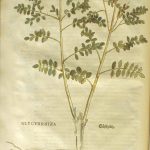
Scientific name: Glycyrrhiza glabra (Fabaceae)
Native to Europe – Mediterranean.
Greek text: M. Wellmann (ed.), Pedanii Dioscuridis De materia medica libri quinque, 3 volumes. Berlin, 1907-1914, vol. 2, pp. 8-10.
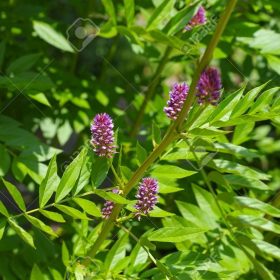
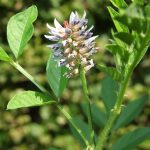
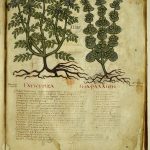
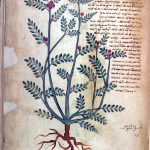
3.5. γλυκύρριζα· οἱ δὲ Ποντικὴν ῥίζαν, οἱ δὲ γεντιανήν, οἱ δὲ Σκύθιον, οἱ δὲ ἄδιψον, <οἱ δὲ σύμφυτον> καλοῦσι· γεννᾶται πλείστη ἐν Καππαδοκίᾳ καὶ Πόντῳ. ἔστι δὲ θαμνίσκος ῥάβδους ἔχων διπήχεις, περὶ αἷς τὰ φύλλα πυκνά, ἐοικότα σχίνῳ, λιπαρὰ καὶ κολλώδη ἁψαμένῳ· τὸ δὲ ἄνθος ὑακίνθῳ ὅμοιον, καρπὸς δὲ πλατάνου σφαιρίων μέγεθος, τραχύτερος, λοβοὺς ἔχων ὡς φακοῦ, πυρρούς, μικρούς· ῥίζαι μακραί, πυ- ξοειδεῖς ὡς γεντιανῆς, ὑπόστρυφνοι, γλυκεῖαι, χυλιζόμεναι ὥσπερ τὸ λύκιον.
ποιεῖ δὲ τὸ χύλισμα πρὸς τραχύτητας ἀρτηρίας· δεῖ δὲ ὑποτιθέντας τῇ γλώσσῃ ἀποχυλίζειν. ἁρμόζει δὲ καὶ πρὸς καῦσον στομάχου καὶ πρὸς τὰ ἐν θώρακι καὶ ἥπατι ψωριάσεις τε κύστεως καὶ νεφρίτιδας πινόμενον μετὰ γλυκέος ἄδιψόν τέ ἐστιν ἀποχυλιζόμενον καὶ τραυματικὸν περιχριόμενον καὶ στοματικὸν διαμασώμενον· καὶ τὸ ἀφέψημα δὲ τῶν ῥιζῶν προσφάτων πρὸς τὰ αὐτὰ ἁρμόζει. ἡ δὲ ῥίζα ξηρὰ λειοτριβηθεῖσα πτερυγίοις κατάπαστος ἐπιτήδειός ἐστιν.
English translation: based on LY Beck, Pedanius Dioscorides of Anazarbus, De materia medica. 3rd edition. Hildesheim, 2017, pp. 177-178.
Licorice: some call it Pontic root, others gentiane, others Scythion, others adipson, and others symphyton; it grows abundantly in Cappadocia and Pontus. It is a small shrub having two-cubit-long shoots surrounded by closely growing leaves which resemble the leaves of mastic and which are shiny and sticky to the touch; but its flower is like a hyacinth, the fruit is as big as the globular catkins of the plane tree, rather rough, having pods like the lentil’s that are reddish and small; the roots are long like the roots of gentian, somewhat astringent, and sweet; juice is extracted from them like from dyer’s buckthorn.
The juice is good for hoarseness of the trachea; it must be placed under the tongue to melt it. Drunk with grape syrup, it is suitable for heartburn, chest and liver ailments, itching of the bladder, and for kidney ailments; allowed to melt in the mouth, it quenches thirst; smeared on, it is good for wounds, and it is good for the mouth when chewed. The decoction of fresh roots is also suitable for the same purposes. Dried and pounded fine, the root is suitable to use as a powder on membranes that grow over the eyes from the inner corners.
Etymology:the Greek name glykyrrhiza, of which the word licorice is a corruption, means “sweet root”.
Disclaimer Text here..