

Donate
Every donation matters.
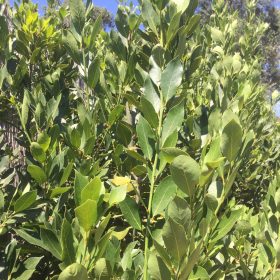
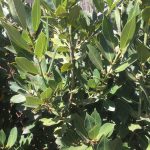
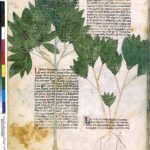
Scientific name: Laurus nobilis (Lauraceae)
Southern Europe.
Flora Europaea (ed. TG Tutin), 1964-1980, vol. 1, p. 246.
Flora Hellenica (eds. A. Strid and K. Tan), 2000. pp. 84-85.
Flowers of Greece (eds. T. Lafranchis and G. Sfikas), 2009, vol. 1, p. 161.
Flowers of Crete (eds. J. Fielding and N. Turland), 2005, p. 262.
Flora of Turkey (ed. PH Davis et al.), 1965-2000, vol. 7, p. 535.
D. Mabberley, Mabberley’s Plant-book, 4th edition, 2017, p. 508.
Greek text: M. Wellmann (ed.), Pedanii Dioscuridis De materia medica libri quinque, 3 volumes. Berlin, 1907-1914, vol. 1, p. 78-79.
1.78. δάφνη· ἡ μέν τίς ἐστι λεπτόφυλλος ἡ δὲ πλατυτέρα. θερμαντικαὶ δὲ ἀμφότεραι καὶ μαλακτικαί, ὅθεν τὸ ἀφέψημα αὐτῶν εἰς ἐγκαθίσματα ταῖς περὶ κύστιν καὶ μήτραν ἁρμόζει διαθέσεσι. τὰ δὲ χλωρὰ τῶν φύλλων ἠρέμα ὑποστύφει· ὠφελεῖ δὲ λεῖα καταπλασθέντα σφηκῶν καὶ μελιττῶν πληγάς, δύναται δὲ καὶ πᾶσαν φλεγμονὴν πραύνειν σὺν ἄρτῳ καὶ ἀλφίτῳ καταπλασθέντα, ποθέντα δὲ ἀμβλύνει τὸν στόμαχον καὶ ἐμέτους κινεῖ.
αἱ δὲ δαφνίδες θερμαντικώτεραι τῶν φύλλων εἰσί. ποιοῦσι δὲ ἐκλειχόμεναι λεῖαι σὺν μέλιτι ἢ γλυκεῖ πρὸς φθίσιν καὶ ὀρθόπνοιαν καὶ τοὺς περὶ θώρακα ῥευματισμούς. πίνονται δὲ σὺν οἴνῳ πρὸς σκορπιοπλήκτους, καὶ ἀλφοὺς δὲ σμήχουσι. τὸ δὲ πίεσμα αὐτῶν ὠταλγίαις καὶ ἤχοις καὶ δυσηκοίαις βοηθεῖ σὺν οἴνῳ παλαιῷ καὶ ῥοδίνῳ ἐγχεόμενον· μείγνυται καὶ ἀκόποις καὶ συγχρίσμασι θερμαντικοῖς καὶ διαφορητικαῖς δυνάμεσι. ὁ δὲ φλοιὸς τῆς ῥίζης αὐτῶν λίθους θρύπτει καὶ ἔμβρυα κτείνει καὶ ἡπατικοὺς ὠφελεῖ τριωβόλου πλῆθος σὺν οἴνῳ εὐώδει πινόμενος.
English translation: based on LY Beck, Pedanius Dioscorides of Anazarbus, De materia medica. 3rd edition. Hildesheim, 2017, pp. 60-61.
The sweet bay: one kind is narrow-leaved and another has broader leaves. Both warm and soften and it is for this reason that their decoctions in sitz baths are well suited for ailments around the bladder and uterus. Of their leaves, those that have freshly sprouted are mildly astringent; ground fine, they are beneficially plastered on wasp and bee stings and they are capable of assuaging all inflammations if daubed on with bread and barley meal, but they weaken the stomach and cause vomiting when drunk.
The bay berries, on the other hand, warm more than the leaves. Ground fine they are efficacious for tuberculosis, orthopnea, and rheums in the chest area when taken as a lozenge with honey or grape syrup. They are drunk with wine for scorpion bites and they clear dull-white leprosies. The juice that is pressed out of them, injected into the ears with aged wine and unguent of roses, helps for earaches, ringing in the ears, and hardness of hearing; it is also mixed with analgesics, with ointments that warm, and with resolvent medications. The bark of their root breaks stones, kills embryos/fetuses, and helps those suffering from liver disease when a quantity of a triobolon is drunk with aromatic wine.
In the ancient Greek world, laurel was dedicated to Apollo, the God of light. This plant was also a symbol of peace and victory, and it was used to make wreaths for emperors, generals and poets.In Italy, laurel wreaths are still worn as crown by graduating students. Bay laurel is also the source of the word baccalaureate.
For those of you who are curious about the origin of the expression “Rest on one’s laurels”, here is a detailed explanation.
Disclaimer Text here..