

Donate
Every donation matters.
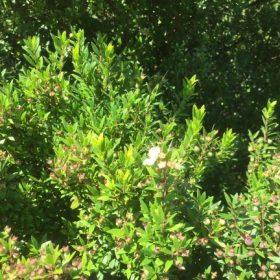
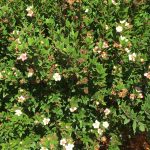
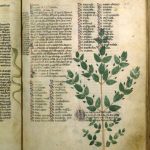
Scientific name: Myrtus communis (Myrtaceae)
Southern Europe to Western Asia.
Greek text: M. Wellmann (ed.), Pedanii Dioscuridis De materia medica libri quinque, 3 volumes. Berlin, 1907-1914, vol. 1, pp. 105-106.
1.112. μυρσίνη ἡ ἥμερος πρὸς μὲν τὴν ἰατρικὴν χρῆσιν ἡ μέλαινα τῆς λευκῆς ἁρμοδιωτέρα, καὶ ταύτης μᾶλλον ἡ ὀρεινή, τὸν μέντοι καρπὸν ἀτονώτερον ἔχει.
δύναμις δὲ αὐτῆς καὶ τοῦ καρποῦ στυπτική. δίδοται δὲ ὁ καρπὸς χλωρός τε καὶ ξηρὸς ἐσθιόμενος αἱμοπτυικοῖς καὶ τοῖς ἐπιδακνομένοις τὴν κύστιν· καὶ ὁ ἐκ τῶν χλωρῶν δὲ μύρτων ἐκθλιβέντων χυλὸς τὰ αὐτὰ ποιεῖ, εὐστόμαχος ὢν καὶ οὐρητικός, ἁρμόζων φαλαγγιοδήκτοις καὶ σκορπιοπλήκτοις σὺν οἴνῳ. καὶ τὸ ἀφέψημα δὲ τοῦ καρποῦ βάπτει τρίχας, ἑψηθεὶς δὲ σὺν οἴνῳ καὶ καταπλασθεὶς τὰ ἐν ἀκρωτηρίοις ἕλκη θεραπεύει, μετὰ πάλης δὲ ἀλφίτου καταπλασθεὶς φλεγμονὰς τὰς ἐν ὀφθαλμοῖς παρηγορεῖ, καὶ πρὸς αἰγιλώπια δὲ ἐπιπλάττεται. καὶ ὁ ἐξ αὐτῆς δὲ γινόμενος οἶνος ἐκθλιβέντος τοῦ καρποῦ καὶ ἐπὶ ποσὸν ἀφεψηθέντος–ὀξίζει γὰρ ὁ μὴ οὕτως σκευασθείς–ἀκραίπαλός τέ ἐστι προπινόμενος, ποιῶν πρὸς ὅσα καὶ ὁ καρπός, ἐγκάθισμά τε πρὸς μήτρας προπτώσεις καὶ δακτυλίου καὶ ῥοικαῖς ἁρμόζει. σμήχει δὲ καὶ πίτυρα καὶ ἀχῶρας καὶ ἐξανθήματα τρίχας τε ῥεούσας ἐπέχει· μείγνυται δὲ καὶ λιπαραῖς ὥσπερ καὶ τὸ ἐκ τῶν φύλλων αὐτῆς σκευαζόμενον ἔλαιον. καὶ τὸ τῶν φύλλων δὲ ἀφέψημα εἴς τε τὰ ἐγκαθίσματα ἁρμόζει καὶ πρὸς τὰ χαλατονοῦντα ἄρθρα καὶ ἀσυμπώρωτα <καὶ> κατεαγότα ὠφελίμως καταντλεῖται· σμήχει δὲ καὶ ἀλφοὺς καὶ πρὸς ὦτα πυορροοῦντα ἐγχυματίζεται καὶ μελασμοὺς τριχῶν, καὶ ὁ ἐξ αὐτῶν δὲ χυλὸς τὰ αὐτὰ ποιεῖ. αὐτὰ δὲ τὰ φύλλα λεῖα καταπλασσόμενα ἐν ὕδατι ἁρμόζει τοῖς καθύγροις τῶν ἑλκῶν καὶ ῥευματιζομένοις τόποις πᾶσι καὶ κοιλιακοῖς, ἐλαίου <δὲ> ὀμφακίνου ἢ ῥοδίνου ὀλίγου καὶ οἴνου μεμειγμένου καὶ ἕρπησι καὶ ἐρυσιπέλασι, διδύμων τε φλεγμοναῖς καὶ ἐπινυκτίσι καὶ κονδυλώμασι. ξηρὰ δὲ λεῖα παρωνυχίαις καὶ πτερυγίοις χρησίμως καταπάττεται καὶ καθύγροις μασχάλαις καὶ μηροῖς, καὶ ἐπὶ καρδιακῶν στέλλει τοὺς ἱδρῶτας· κεκαυμένα δὲ καὶ ὠμὰ μετὰ κηρωτῆς πυρίκαυτα καὶ πτερύγια καὶ παρωνυχίας ἰᾶται. χυλίζεται δὲ τὰ φύλλα παραχεομένου οἴνου παλαιοῦ ἢ ὕδατος ὀμβρίου καὶ ἐκθλίβεται. ἡ δὲ χρῆσις αὐτοῦ προσφάτου ὄντος· ξηρανθεὶς γὰρ εὐρωτιᾷ καὶ ἀδυνατεῖ. τὸ δὲ <μυρτίδανον> λεγόμενον ἐπίφυσίς ἐστιν ἀνώμαλος καὶ ὀχθώδης καὶ ὁμόχρους, οἱονεὶ χεῖρες περὶ τὸ τῆς μυρσίνης πρέμνον. στύφει δὲ μᾶλλον τῆς μυρσίνης· ἀποτίθεται δὲ κοπὲν καὶ μιγὲν οἴνῳ αὐστηρῷ, ἀναπλασθέν τε εἰς τροχίσκους ἐν σκιᾷ ξηραίνεται. δραστικώτερον δέ ἐστι τοῦ φύλλου καὶ καρποῦ, μειγνύμενον κηρωτῇ καὶ πεσσοῖς ἐγκαθίσμασί τε καὶ καταπλάσμασι τοῖς στύψεως δεομένοις.
English translation: based on LY Beck, Pedanius Dioscorides of Anazarbus, De materia medica. 3rd edition. Hildesheim, 2017, pp. 81-82.
The cultivated myrtle that is black is more suitable for medical use than the white, and of this, the one growing on mountains is best, although it has a more insipid fruit.
Its property and that of its fruit are astringent. The fruit is given to eat both fresh and dry to people who spit blood and to those experiencing a burning sensation in the bladder. Also the juice from pressed fresh myrtles does the same, being good for the stomach, diuretic, and suitable with wine for those stung by venomous spiders and scorpions. The decoction of its fruit colors hair; boiled with wine and laid on, the fruit treats sores on the extremities, plastered on with very fine barley groats, it assuages eye inflammations, and it is plastered on for lachrymal fistulas. Also the wine made from it by pressing the fruit and boiling it for a while—for unless it was prepared this way it becomes sour—if drunk beforehand counteracts nausea, it is effective for as many purposes as is the fruit, and it is an appropriate sitz bath for uterine and anal prolapses and for feminine discharges. It clears off dandruff, scurf, and pustules, and it stays falling hair. It is also mixed with oily plasters, as is also the oil that is made from its leaves. The decoction of its leaves is suitable for sitz baths and it is poured to advantage over joints that are loose, not mended, and weakened. It clears dull-white leprosy, it is poured for ears that exude pus and for dyeing hair black. Their juice also does the same. The leaves themselves, ground up and plastered on with water, are suitable for those sores that contain a great deal of moisture, for all areas that are afflicted by rheums, for people suffering in the bowels, and when combined with oil of unripe olives or with a little unguent of roses and wine, for shingles, erysipelas, testicular inflammations, pustules that are most painful at night, and callous lumps. Dried, they are advantageously sprinkled ground up on whitlows, on membranous growths over the eye, on very wet armpits and thighs, and they stay the sweats of heart patients. Burned and even raw, they treat in combination with a cerate burns, membranous growths over the eyes, and whitlows. Juice is extracted from the leaves by pouring over them old wine or rain water, and then squeezing them. It is used while fresh, for after it has dried it is moldy and weak. But the so-called myrtidanon is an irregular, tuberous, and uniformly colored excrescence, as if it were hands around the trunk of the myrtle. It is more astringent than the myrtle. After it has been chopped, mixed with harsh wine, and shaped into troches, it is dried in the sun then stored. It is more effective than either the leaf or the fruit, being combined with cerate and with pessaries, and with sitz baths and poultices in need of astringency.
Disclaimer Text here..